
Re:pack
Design your style
Re:pack is an eco-travel lifestyle brand that manufactures cabin luggage with a convenient removable brief-case made by up-cycling aluminum tin cans and plastic bottles from the airline industry.
Category
Material innovation and CMF,
Manufacturing (Collaboration with Factories)
Problem solving
Story telling
Ethnographic research
Social Innovation,
Product development,
Year
Status Of Project
Manufacturing Ready
(September - November 2019)

Awards & Publications
Project exhibited in Design Shanghai, Design China Beijing 2020 and Matter Matters Exhibition at Hong Kong Land Art Festival by Neuni
Won a the New Material Application Award by Design Shanghai and Neuni.
Signed a licensing and distribution agreement with Neuni
Re:pack - Fresh out of the factory
(Soon launching on Kickstarter)
It is a 3D printed mock up manufactured by a luggage factory in China who manufactures for luggage brands like Samsonite and Tumi. I partnered with them in order to turn this concept into reality and ready for production.


WHY
My inspiration for re:pack was born while traveling on an airplane to visit 33+ factories across China.
My broken suitcase, wrinkled clothes in the luggage and difficulty in managing three different bags simultaneously while traveling, inspired me to create a better one.
Anji Fan Factory

Edimass Furniture

SMP

Defining the Problem
On part of consumers
Luggages are very important aspect while traveling. However travelers don’t have any personal connection to them. Also, there are no mid range suitcase out there that represents users style and personality

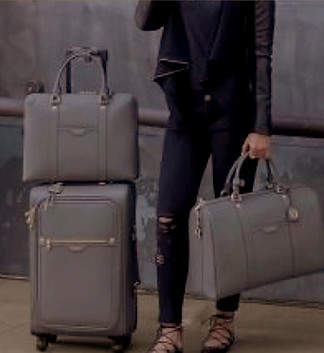
Travelers often need to carry multiple bags for different purposes

Gets easily damaged and dented while travelling

Poor Shopping Experience & luggages out there are very boring and uninspiring


Hard to identify ones luggage at the baggage carousal as all look similar

Have poor interior organization structure
On part of the aviation industry
Huge amounts of plastic and food waste end up in landfill or incinerated. Some airlines are trying to tackle the problem, but it's complicated.
Plastic cups, cans and boxed juices, some of them opened and maybe one cup poured from them then thrown out, plastic wrappers for snacks, cocktail straws, napkins ... and none of it recycled. This all comes on top of the environmental impact the flight alone has.
Airlines produce
5.2 million tons
of waste every year which mostly consists of plastics, aluminum and tin cans and it all ends up into landfills and oceans.
By 2030, airlines are projected to produce 10 million tons of waste annually.


Challenge
What if, we could repurpose the waste collected from airlines to keep it from ending up in landfills/ oceans and make the materials used to manufacture luggage more sustainable yet useful?
Creating a Circular Economy
Creating a circular economy, where the waste from airline industry is in turn used to make luggage for air travel, ultimately reducing the carbon footprint thus preventing waste to enter into landfills and oceans.

Design Criteria

Redesigning a mid range suitcase such that it is easy to carry, has good organizational structure and represents user’s personality??

Re:trace
(Up-cycled material)

Re:pack
(Luggage)

Re:trace
(Material Innovation)

Re:trace is a material that was innovated by up-cycling waste plastic and aluminum from the airline industry to make the luggage extremely light weight and sturdy.
Turning trash to treasure
I experimented with a wide variety of materials that are used in the airline industry under varying conditions however I selected these two materials specifically because of their properties they exhibit and when combined under different conditions they produce amazing levels of threshold, stability and light weight.

Recycled aluminium

Recycled PET Felt
Light weight
Recyclable
Corrosion resistant
Odorless
Light weight
Low thermal conductivity
Excellent compressibility
Low Cost
Inspiration for Material Pattern


How is re:trace different and better ?
-
Sustainable /Recyclable
-
Extremely light weight than current materials used to make luggage.
-
Almost as light as carbon fibre.
-
Very sturdy and strong
-
Highly Impact Resistant
-
Eye catching and fashionable

Customizable printed recycled tin can pattern on recycled aluminum from the airline industry

Density : 129.31g ( 28cm x 20cm)
Almost as light as carbon fibre yet recyclable
Customizable patterns and color ways
Users can customize from a given range of patterns and colors according to their own style and preferences to make it look unique and can emotionally connect with them

Re:pack
(Luggage design and functionality)

re:pack is a convenient modular cabin luggage that is made by up cycling waste materials from airline industry.
Key Features

Well Organized
You can segregate your fresh clothes from used ones easily on the go and maintain your clothes well ironed.

Modular Brief Case
Now you no longer have to carry a separate laptop bag. Keep all your documents, gadgets and passport easily accessible on the go.


Charge on the go
The brief case is equipped with a charging point so that you never run out of battery and a TSA approved lock so that no one is getting into your stuff.
Impact
Environmental
Creating a circular economy, where the waste from airline industry is in turn used to make luggage for air travel, ultimately reducing the carbon footprint thus preventing waste to enter into landfills and oceans.
Social
The brand helps build and connect the community of like minded individuals who want / desire to adapt sustainable travel practices and in turn influence and encourage others to adapt such practices.
Economical
Since the material developed is basically made by converting trash to treasure, thus it is really economical and viable to manufacture and can be made available at cheaper price for the mass market. It not only saves the environment but at the same time is light weight, sturdy & impact resistant.

