

Aura is a holistic mental wellness ecosystem that utilizes cognitive behavioral learning techniques and offers real time personalized guidance, tools and support for adults with undiagnosed ADHD, Sensory Processing Disorder and Autism to improve quality of lifestyle and mental wellbeing.
Stage
In Progress...
Mid-Fidelity Prototyping, testing stage with further feature improving and exploration
Timeline
4-5 months (August 2023 - December 2023)
In guidance from researchers and scientists from Caltech.
Area of Focus
Personal Connection


Stage

Because of the project's large scope, I'm now adding a few features (interaction design) and prototyping/building those features to test and develop my coding and sensor technology skill sets.


How might we empower and support adults in third-world nations who have undiagnosed ADHD, SPD, or Autism by providing them with tools to improve their physical and emotional welfare and understanding of their condition?
Solution : Ecosystem of Products
Aura is a modular personalized brain-computer interface Augmented reality glasses for the consumers that employs AI and machine learning algorithms to monitor and comprehend user behavior daily, employing cognitive-behavioral learning techniques to offer real-time, personalized guidance and support for adults with undiagnosed ADHD, Autism, and Sensory Processing Disorder. "Aura" aspires to simplify daily life, foster connections, enhance productivity, improve sleep, and promote mental health for its users.
.jpg)
Modular Brain Computer Interface tech accessory that the consumers can purchase and curate as per their needs. The product consists of Augmented reality glasses, Smell Sensory Processing attachment, decision regulator and EEG sensors to help with monitoring brain activity and provide guidance in real time.
Brain-Computer Interface
Augmented Reality Glasses

Haptic Tactile Smart Wearable
Accessory measures heart rate, anxiety, and stress. It features digital + tactical sensory embossed screen feedback on the face of the watch to minimize screen distraction in certain situations and to provide the user with only the essential feedback and advice in real-time through pattern change, tailored to their specific needs.

Mobile App + Augmented Reality Interactions
The mobile app offers input for improvement and is used to assess and manage daily mental health tools.
The Augmented Reality display would offer support based on analyzing the current environmental situation and scenario and would offer real time guidance and personalize tools to use as needed.
Product Features
Brain-Computer Interface Augmented Reality Glasses for the Consumers
Modular Device Attachments
-
Users can attach and use the devices based on their needs.
-
The devices attach through magnetic attachment


Features
Sensory Control
01
Scenario: Individual in a client meeting with colleagues in a loud crowded coffee shop, unable to follow through a conversation
Sound
Being able to manage ambient noise and background music at a volume that suits each person and feeling more in command of adjusting the environment to suit their needs. This allows one to be involved yet still be able to hear co-workers, friends, and family more clearly.
Smell
Ability to reduce or eliminate odors in the environment that overwhelm or unnerve them.
Light
In Process....
02
Promotes Deeper Connections and Improved Communication
In addition to offering questions and advice on how to handle the situation and improve communication, the system assists these people in identifying those behaviors and actions in real-time, enabling them to maintain their authenticity and build lasting relationships.
Scenario: An Individual in a professional meeting with PI and a colleague, has trouble with communication and acts impulsively affecting them in a given moment.
Recognition of Social Cues
Real-time recognition of social cues & suggestions for suitable responses in various situations
Assist with managing Impulsivity
Assists users in real-time analysis of their actions and speech in a particular scenario, enabling them to learn and adjust as necessary.
Additionally, the system assists users in providing a recap of the conversation if they become distracted and offers advice on how to react appropriately and manage tense circumstances.
Helps with Vocabulary and Remembering
The system assists users by giving real-time indicators when they appear to be interrupting others or acting impulsively per social standards.
Furthermore, it might improve their vocabulary, help them recall specifics of events in real-time, and assist them in forming coherent sentences and words in their minds.
03
Improved concentration and assistance with remembering people
Scenario: A regular day at work, an Individual is distracted, unable to concentrate and be productive at work
Improved Concentration
Research indicates that in order to enhance focus, people with ADHD can change their tasks, take a break, or engage in physical exercise to raise their dopamine levels. This will help them feel more motivated and productive.
The wearable device has a feature that uses vibration to inform users when it detects their tendencies of low concentration and advises quick breaks based on those patterns. To help the user return to work more productively, the system can also suggest activities that raise dopamine and serotonin levels.
Feature coming soon!
Assistance with remembering people
The system assists the users in remembering people's names, places and dates of their most recent meetings, a synopsis of their most recent conversation, and potential topics of conversation at any given time, all of which help prevent embarrassment and promote user relationships.
Feature coming soon!
Working Prototype
Time built-in : 2-3 weeks
The prototype focussed on targeting the working memory of individuals with ADHD to help them remember people's names, items or things to do on day to day, their conversation etc.
I focussed on starting to build this prototype for two reasons....
1) People I interviewed highly complained of this issue and mentioned that the current systems didn't help with it.
2) With my current skillsets and resources I had available to work from home, I decided to learn Python and sensor technologies and realized that building this prototype would be efficient to learn and start developing skills using this as a proof of concept.

1
Meeting a new person at a given moment

2
Tap on the wearable at the moment to record /remember the person's name and summary of the info discussed and location where met

3
Next year when she came across the same person...

4
The system remembers it and through Augmented Reality can retrieve and showcase the information to the user at the given moment so that she is not embarrassed at not being able to remember the other person.

Using Python and Face Detection Technology
I utilised the laptop's camera to test the idea of facial recognition because it was my first time learning to develop something like this in Python. I discovered during the trial that the facial detection had limitations and would not recognize faces if we made expressions, wore hats, or wore sunglasses. This got me thinking about how useful it would be if someone were to fast walk by and have a different haircut, spectacles, etc. in the real world. Then, would it be able to identify the person who was saved?
Proceeding Forward.. I want to investigate the effectiveness of the system's facial recognition detection in real-world circumstances by utilising augmented reality (AR) in future testing.
Using Circuit Python and Sensor Technology
To build a prototype and run tests, I studied circuit python. I could record as soon as the user talked and use the microphone to record their comments by using Ada Fruit's circuit playground sensor. Nevertheless, the sensor failed to connect to Wi-Fi, which would have enabled it to use the speech-to-text API and communicate its results to a computer or calendar.
I'm now learning Raspberry Pi to progress the prototype even further.
Research Process


What is Sensory Processing Disorder ?


The brain has difficulties receiving and processing information that is received through the senses when an individual has a sensory processing disorder.
Individuals with S.P.D. are affected every day, which can impede their ability to participate in ordinary activities, like using the restroom or going to a restaurant.
They often struggle with detecting or interpreting sensory stimuli, which can manifest into motor, language, or behavior skill difficulties.


Insights
Adults with both ADHD and Autism have some overlapping conditions which makes their life quite complicated.
They want both novelty and routine in their daily lives, which makes even simple activities difficult for them to accomplish.
Sensory Processing Disorder is not a stand-alone disorder.
It isn't a recognized medical diagnosis at this time and co-exists with other conditions.


The current treatment entails a great deal of methodological trial and error. To determine which treatment works best for them, the customer must try out various options. It might take years to comprehend and implement any treatment, and during that time, it can be difficult for the patient to determine whether or not the treatment is actually benefiting them as they develop.
Many people lack the resources and time to fully comprehend and receive the appropriate assistance when they need it. This has a profound impact on a person's entire life and decisions.


Competitor Analysis

Describe your image

Describe your image
Describe your image


Insights on Competitor Analysis

Qualitative Ethnographic Research

Describe your image

Describe your image
Describe your image
User Persona and User Journey: Day in a life

Describe your image

Describe your image
Describe your image


Brainstorming

Describe your image

Describe your image

Describe your image
Brain-Computer Interface Augmented Reality Glasses
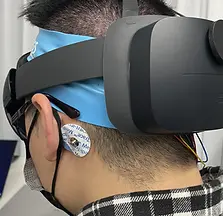
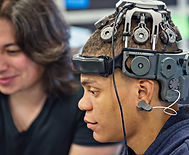
I took inspiration and learned about their workings, sensor technologies, and use cases of brain-computer interface technology being researched at different companies and universities. My goal was simply to learn from their successes and failures, how certain sensors could be used to track and collect brain wave data.
I analyzed those learnings and cross-referenced them with my insights and problems analyzed to build on them, improve user experience and made the device more human centric to the problem trying to solve as a Product Designer.


Sketches


Key Learnings and Feedback
-
People didn’t want devices that flatten their hair and they didn't seem comfortable wearing that design the whole day
-
Adults who are neurodiverse don't wish to call attention to themselves or allow others to see that they are different especially in workplace as they fear of being treated differently, missed opportunities due to lack of knowledge about the condition among co-worker, Fear of being left out or being bullied without knowledge
-
They wouldn’t prefer to use certain coping tools all the time but prefer to have them and would be of great help in certain situations.
-
There are a lot of tools available out there in the market that only focus on certain conditions. Most neurodiverse adults have multiple overlapping conditions which makes it harder to purchase and use tools accordingly to support them
-
Many are afraid that they might get addicted or overly dependent on these tools going further so don’t prefer to use them at times.
-
Many are afraid that they might get addicted or overly dependent on these tools going further so don’t prefer to use them at times.
What if...
The device was in form of aesthetically pleasing Fashion Tech consumer product, allowing the user to personalize their wearable based on their needs and style.
Thus making the accessory extremely personalized according to the individual thus not calling any attention on a specific user but more as an accessory for physical and mental wellbeing


Haptic Tactile Smart Wearable
Inspiration
For this wearable accessory I envisioned a technology of 3D Haptic interface that can switch from 3D Tactile Interaction to Digital interaction when needed. I believe the wearable should help the user with ADHD and Sensory processing disorder to help align their life for the better rather than giving continuous app notifications and distract them from real life experiences/ moments and prevent them from constantly being indulged in screens in certain situations.
The wearable is meant to provide quick visual feedback of gestural interactions performed to activate a certain function. Also its meant to give alerts and notifications that would help improve user's concentration, provide guidance in real time and improve overall wellbeing.
I learned about similar forms of technology envisioned being researched by different universities and research groups at different levels and the technology for this haptic tactile interface published in a few research papers which inspired me the hope for this device's further development.


